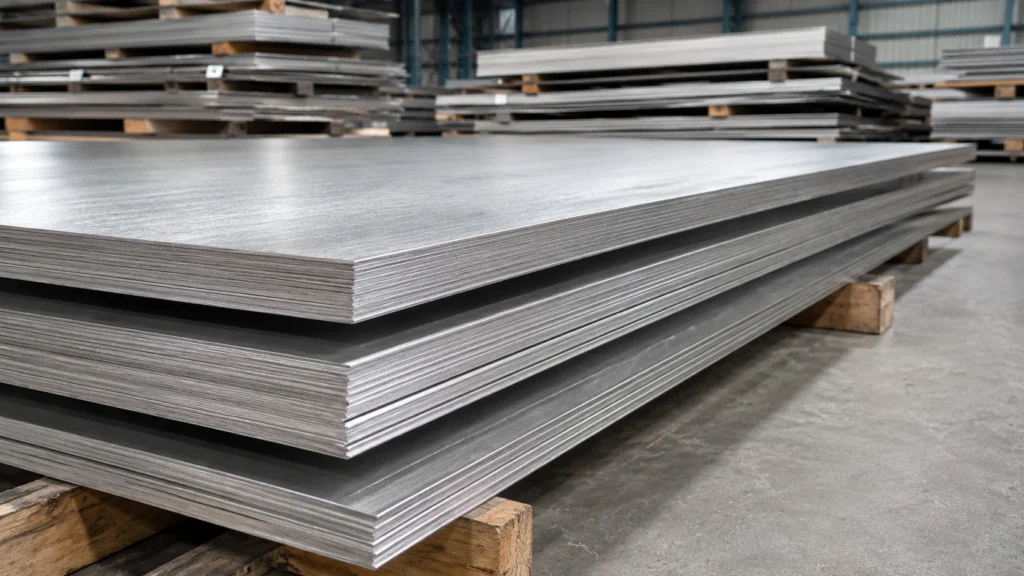

Stainless steel plates and stainless steel coils are two of the most widely used product forms in industrial manufacturing. Although they may be produced from similar grades, they are supplied and processed differently and are suited to different applications.
Understanding the difference helps buyers choose the right material for production, fabrication and project requirements.
What Are Stainless Steel Plates?
Stainless steel plates are flat products supplied in cut lengths. They are typically used where thickness, flatness, structural strength or direct fabrication is important.
Common applications include industrial equipment, chemical tanks, pressure vessels, structural components, food processing equipment, energy projects and heavy fabrication.
Plates are available in different thicknesses, widths, lengths and surface finishes. Because they are supplied in fixed dimensions, stainless steel plates are convenient for customers that require direct cutting, welding, machining or fabrication.
What Are Stainless Steel Coils?
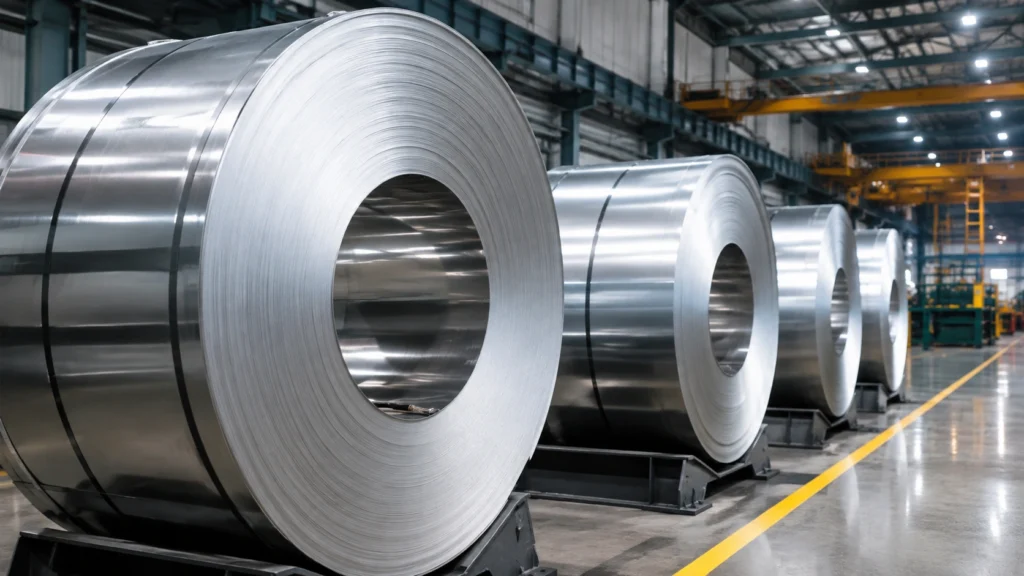
Stainless steel coils are continuous rolled products supplied in coil form. They are widely used in high-volume production and further processing.
Typical applications include automotive components, appliances, metal stamping, roofing and cladding, kitchen equipment, food processing systems and general manufacturing.
Coils can be slit into narrower widths or cut into sheets according to customer requirements. For manufacturers with continuous production lines, coils can provide higher processing efficiency and better material utilization.
Main Differences
The main differences between stainless steel plates and coils are related to form, thickness range, processing and application.
Plates are generally selected for heavier fabrication, project-based requirements and thicker material.
Coils are more suitable for continuous production, stamping, forming and high-volume processing.
The final choice depends on required thickness, width and length, production volume, processing method, equipment capability, surface finish and end-use application.
Surface Finish Options
Both plates and coils can be supplied with different surface finishes depending on application. Common options may include No.1, 2B, BA, No.4, HL and polished finishes.
Surface finish is especially important in food processing, architecture, decorative applications and equipment manufacturing.
Which Product Should You Choose?
If your project requires heavy fabrication, structural use or specific cut dimensions, stainless steel plate may be the better choice.
If your production requires continuous feeding, slitting, stamping or large-volume processing, stainless steel coil may offer greater efficiency.
In many cases, customers may use both forms within the same supply chain.
Final Thoughts
Stainless steel plates and coils serve different but complementary roles in industrial production. Choosing the right form helps improve processing efficiency, reduce waste and maintain product quality.
For international sourcing, buyers should confirm grade, thickness, width, surface finish, standard, quantity and delivery requirements before placing an order.