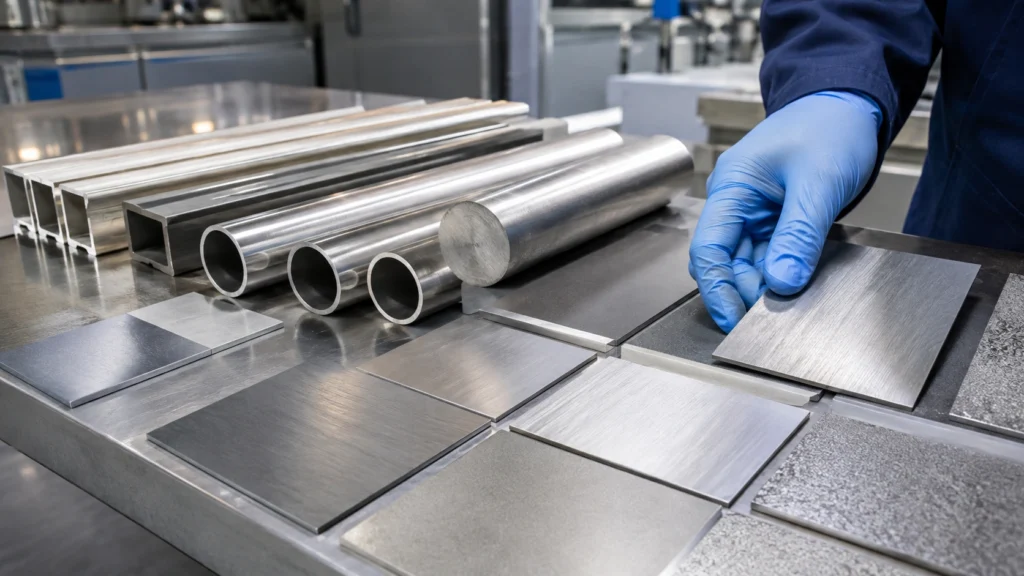

Choosing the right stainless steel grade is one of the most important decisions in any industrial project. The correct material can improve corrosion resistance, extend service life, simplify fabrication and reduce total operating cost. The wrong grade, however, may lead to premature failure, unnecessary expense or processing difficulties.
When evaluating stainless steel, engineers and buyers should consider several key factors.
Corrosion Resistance
Corrosion resistance is often the main reason for choosing stainless steel. Different grades perform differently depending on the environment.
304 and 304L are widely used for general industrial, food processing and architectural applications. They offer good corrosion resistance and excellent formability.
316 and 316L contain molybdenum, which improves resistance to chlorides and more aggressive environments. These grades are commonly selected for marine, chemical and process industry applications.
For highly corrosive environments, duplex grades such as 2205 may provide higher strength and improved resistance to stress corrosion cracking.
Operating Temperature
Temperature also affects material selection. Some stainless steel grades are designed for high-temperature applications, while others perform better in low-temperature environments.
Grades such as 309S and 310S are commonly considered for applications involving elevated temperatures because of their oxidation resistance. The expected operating temperature should always be reviewed before final material selection.
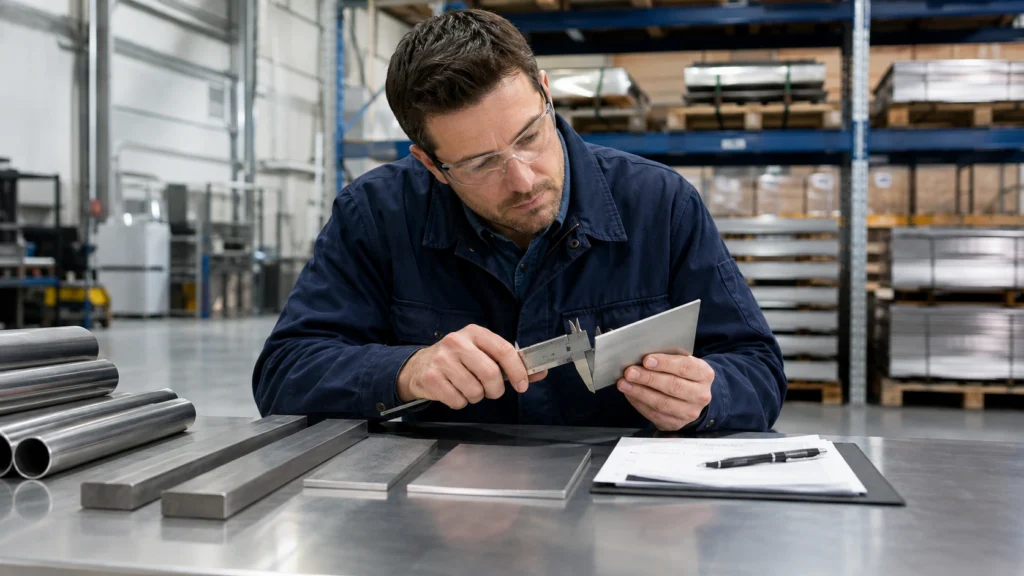
Strength and Mechanical Properties
Mechanical requirements vary depending on the application. Stainless steel bars used for machining may require specific hardness or tensile properties, while stainless steel plates used in structural or pressure applications may require higher strength and documented mechanical performance.
Duplex stainless steels can provide higher strength than conventional austenitic grades, allowing designers to reduce material thickness in some applications.
Fabrication and Processing
Material selection should also consider how the stainless steel will be processed. For welding applications, low-carbon grades such as 304L and 316L are often preferred because they help reduce the risk of sensitization during welding.
For deep drawing, bending or forming, good ductility is important. Surface finish, thickness tolerance and flatness can also affect processing efficiency.
Standards and Documentation
Industrial customers often require materials to comply with specific standards such as ASTM, EN or DIN. Before placing an order, buyers should confirm:
- Required material grade
- Applicable standard
- Dimensions and tolerances
- Surface finish
- Mechanical properties
- Material certificates
- Inspection requirements
Reliable documentation and traceability are especially important for energy, chemical, food processing and engineering applications.
Final Considerations
There is no single stainless steel grade that is suitable for every project. The best choice depends on environment, temperature, strength, fabrication method, standard and budget.
By reviewing these factors early, buyers can reduce risk and improve overall project performance. Whether the requirement is for stainless steel plates, coils, tubes or bars, selecting the correct grade is the first step toward a reliable supply solution.