


Stainless steel tubes are widely used across industrial systems because they combine corrosion resistance, strength, clean appearance and long service life.
From food processing lines to chemical plants and mechanical equipment, stainless steel tubing plays an important role in both fluid handling and structural applications.
Corrosion Resistance
One of the biggest advantages of stainless steel tubes is their resistance to corrosion. This makes them suitable for environments where carbon steel may require additional coatings or maintenance.
Grades such as 304 and 316 are commonly used in applications involving water, chemicals, food products and outdoor exposure. 316 and 316L are often preferred in environments containing chlorides or more aggressive media.
Hygienic Performance
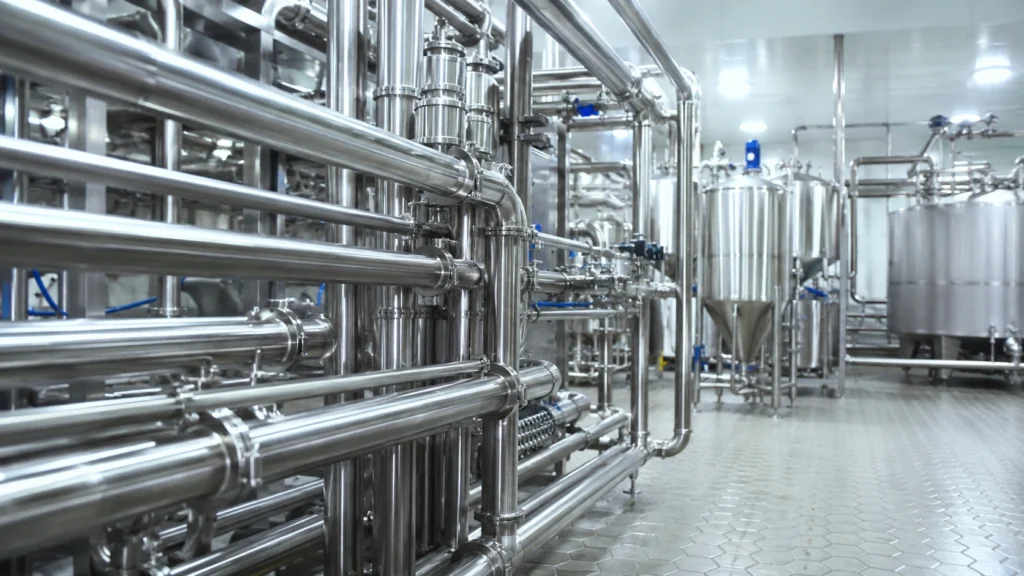
Stainless steel tubes are widely used in food, beverage, pharmaceutical and hygienic processing systems. Smooth surfaces are easier to clean and help reduce contamination risks.
Depending on the application, tubes can be supplied with specific internal and external finishes to support hygienic requirements.
This is one reason stainless steel is commonly found in beverage production, dairy processing, food equipment, pharmaceutical systems and sanitary pipelines.
Strength and Durability
Stainless steel tubes offer a strong balance between mechanical performance and corrosion resistance. They are suitable for applications involving pressure, vibration, temperature changes and long-term operation.
For industrial systems, durability can help reduce maintenance requirements and extend equipment service life.
Welded and Seamless Tubes
Stainless steel tubes are commonly available in welded and seamless forms.
Welded tubes are produced by forming and welding strip or plate material. They are widely used for structural, mechanical and process applications.
Seamless tubes are produced without a welded seam and are often selected for applications involving higher pressure, temperature or demanding service conditions.
The correct type depends on the design standard and application requirements.
Common Industrial Applications
Stainless steel tubes are used in many sectors, including chemical and petrochemical, food and beverage, energy, machinery and engineering, automotive, construction and water treatment.
They may be used for process lines, heat exchangers, structural frames, mechanical components, exhaust systems and equipment manufacturing.
Key Purchasing Specifications
- Grade
- Standard
- Outside diameter
- Wall thickness
- Length
- Welded or seamless construction
- Surface finish
- Tolerance
- Testing requirements
- Material documentation
Conclusion
Stainless steel tubes are widely used because they provide reliable performance in demanding environments. Their combination of corrosion resistance, strength, hygiene and versatility makes them suitable for a broad range of industrial systems.
For projects involving international supply, clear technical specifications and quality documentation are essential to ensure the right stainless steel tube is selected and delivered.